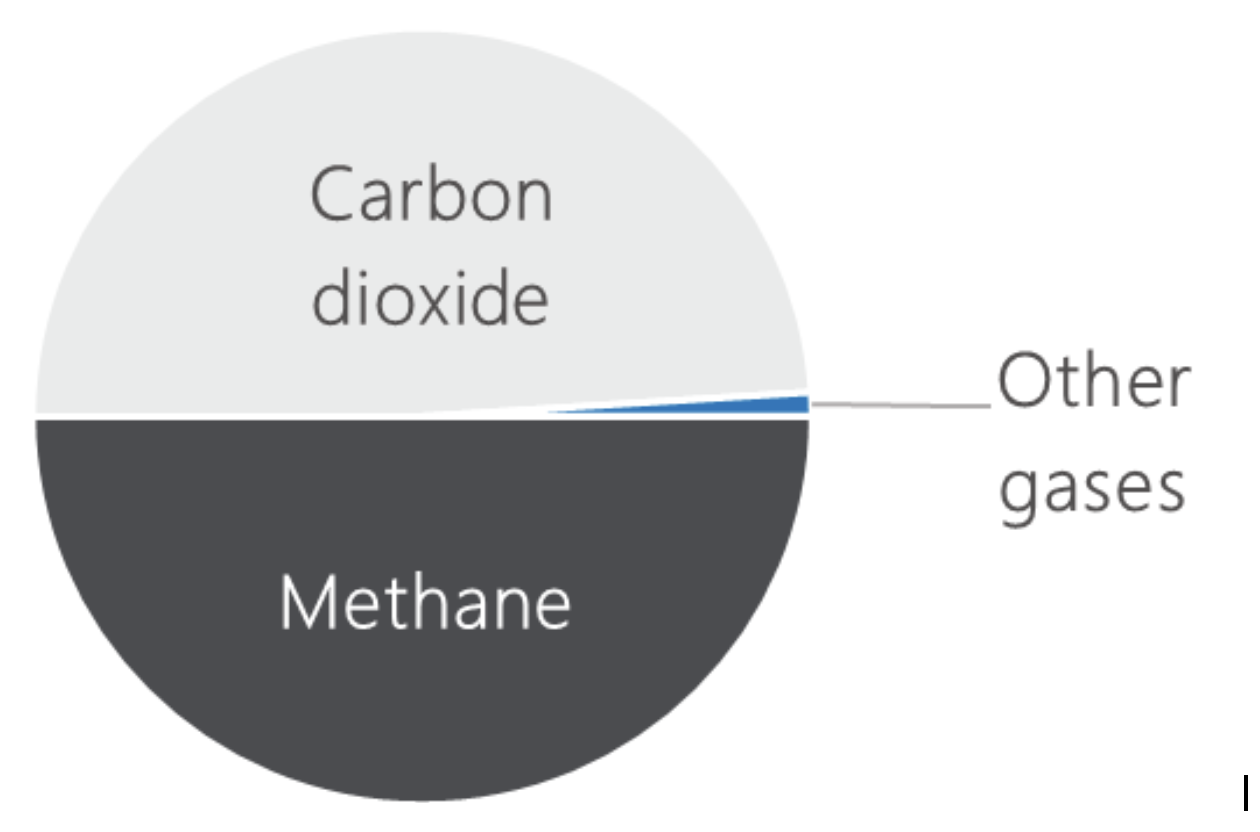
Landfill gas is a mixture of gases produced when organic materials decompose in landfill without oxygen. This is a process known as anaerobic decomposition. Landfill gas is composed of several substances, including methane (CH4), which is a potent greenhouse gas with a global warming potential around 28 times that of carbon dioxide over a 100-year timeframe. In each tonne of landfill gas, there is approximately 50 percent methane, 50 percent carbon dioxide, and trace amounts of nitrous oxide, sulphides, and other gases:
Together, these gases can cause negative environmental, safety, and community impacts if left unmanaged. Methane accumulation is a fire and explosion hazard at landfill sites and most licenced landfills in NSW do surface monitoring to detect unsafe concentrations of methane. Methane itself is odourless but landfill gas is not, due mostly to those trace amounts of sulphides and ammonia. Unmanaged landfill gas can therefore create odour issues as nearby sensitive receptors. Landfill gas additionally poses an asphyxiation hazard at high concentrations in enclosed spaces.
How landfill gas is produced
Organic waste like food scraps, paper, and garden waste deposited in a landfill decompose without oxygen and sunlight. This process is slow and it produces landfill gas, a mix of mostly methane (a powerful greenhouse gas) and carbon dioxide. By contrast, organics that breakdown with the aid of oxygen and sunlight, turn back into biogenic carbon – a good soil conditioner.
There are four phases of bacterial decomposition in landfill waste. Different parts of a landfill or landfill cell may be at different stages of decomposition, meaning the waste mass will likely have pockets where it is richer in some gases such as nitrogen, oxygen, hydrogen, and carbon dioxide compared to methane.
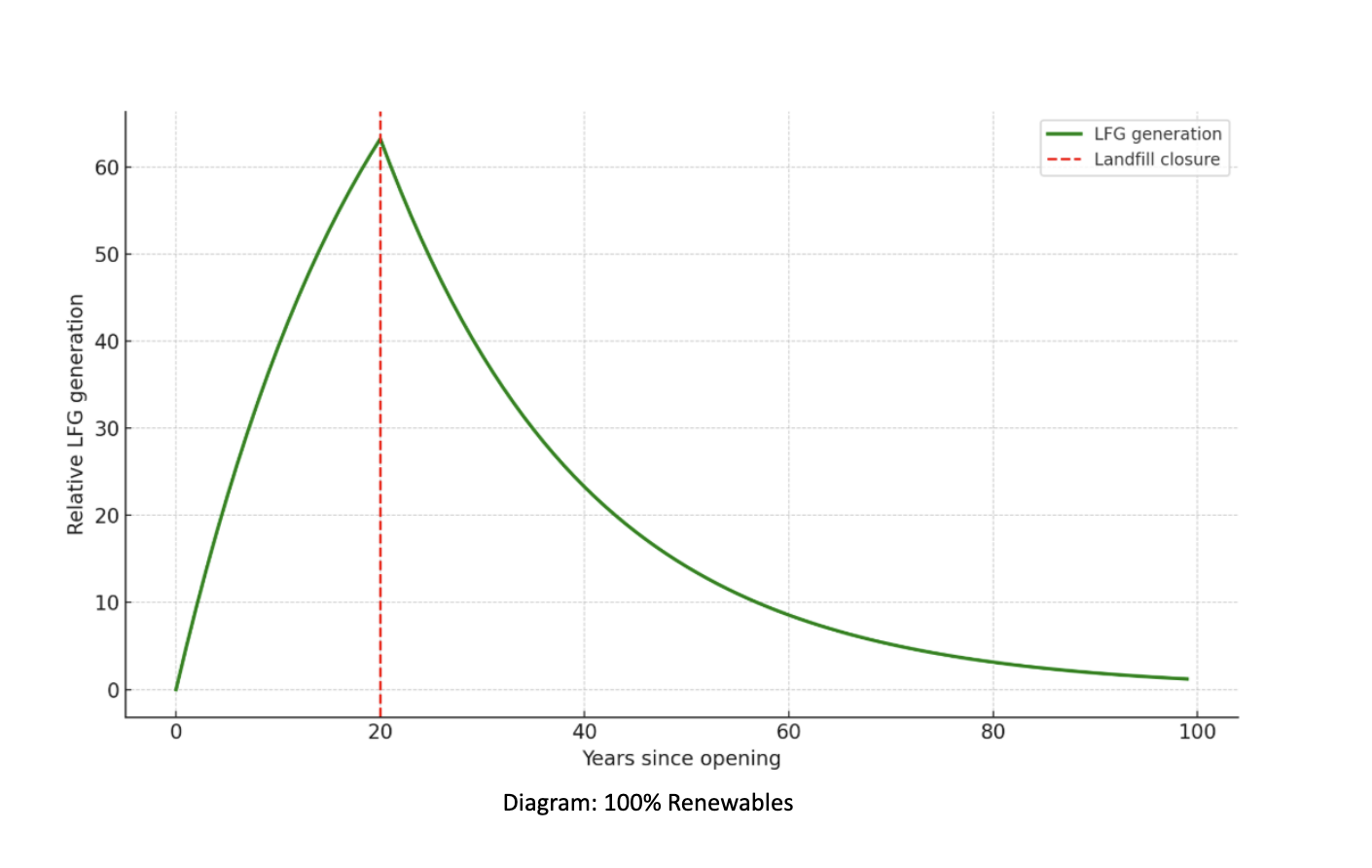
Landfill gas generation starts slowly, often beginning 6 to 12 months after waste has been deposited and compacted. Emissions linked to a unit of waste can peak 5 to 7 years after that waste has been deposited, but landfill gas continues to generate and leak out of landfills for 30+ years after landfill closure. In fact, 50 percent of all landfill gas generation is likely to occur in the first 30 years post closure of a landfill/landfill cell.
Even if a landfill is decades old, it may still be releasing methane from waste deposited in the 1980s or 1990s - especially if conditions underground are moist and airtight. These are called legacy emissions.
New and legacy landfill emissions
When new waste is added to a landfill, that waste:
begins its own long breakdown process
traps heat and moisture, which can keep older waste active for longer
adds another wave of methane emissions on top of what is already coming out (legacy emissions).
Annual emissions from a landfill are derived from new and legacy waste. These emissions build up year after year, like overlapping waves. Closed landfills can remain a major source of methane unless properly managed:
Summary – what is landfill gas?
Landfill gas is a mixture of gases produced when organic materials decompose in landfill without oxygen
These gases can cause negative environmental, safety, and community impacts if left unmanaged
Landfill gas generation starts slowly, often beginning 6 to 12 months after waste has been deposited and compacted into a landfill
Landfill gas continues to generate and leak out of landfills for 30+ years after landfill closure
Annual emissions from a landfill are derived from new and legacy waste.
CNSWJO
Central NSW Joint Organisation
Works with member councils across Central NSW to coordinate regional strategies, improve infrastructure, and support community resilience.






%20copy%201.avif)


%20copy%201.avif)

